
Every heavyweight hoodie listing quotes a GSM figure. Almost none of them explain it. The number gets used as shorthand for quality, which it isn't — but it does tell you something real, if you know what you're reading.
What the number measures
GSM stands for grams per square metre. Take one square metre of the fabric, weigh it, and that's your figure.
It measures density — how much material is packed into a given area. It does not measure softness, durability, warmth, or how well something is made. A dense fabric can still be badly cut and poorly sewn.
What counts as heavyweight
Rough working ranges for cotton fleece and French terry:
- 180–250 GSM — lightweight. Summer hoodies, layering pieces. Drapes close to the body.
- 250–320 GSM — midweight. Where the large majority of high-street hoodies sit, including many that market themselves as heavy.
- 320–400 GSM — genuinely heavyweight. Holds structure, doesn't collapse on the shoulder.
- 400–500+ GSM — very heavy. Substantial in the hand, holds an oversized shape without help, slow to dry.
When a brand says "heavyweight" without a number, it usually means 280–320. That's not dishonest, but it isn't what most people picture.
What high GSM actually gives you
Structure. This is the real reason it matters for oversized cuts. A heavy fabric stands away from the body and holds the silhouette the pattern intended. A light fabric at the same measurements collapses and just looks too big.
Longevity of shape. Denser fabrics resist stretching at the cuffs, hem and neckline — the places a cheap hoodie fails first.
Opacity. Lighter fabrics show what's underneath, particularly in pale colourways.
What it doesn't give you
Warmth. This is the biggest misconception. Warmth comes from trapped air, not mass. A 350 GSM fleece-lined hoodie will outperform a 450 GSM single-layer one in cold weather, because construction beats density for insulation.
Softness. That's finishing — brushing, enzyme washing, fibre quality. Plenty of heavy fabrics feel like cardboard.
Quality. GSM says nothing about stitch density, seam finishing, whether the ribbing recovers, or whether the print will survive ten washes. You can make a 500 GSM garment badly.
Compare like with like
GSM ranges differ by fabric type. A 300 GSM polar fleece and a 300 GSM French terry are not comparable garments — fleece is lofted and full of air, terry is dense and flat.
The number only means something within a category. Comparing a fleece figure to a terry figure tells you nothing useful.
Be sceptical of round numbers
Real mill specs come with tolerances. A supplier will quote something like "400 GSM ±5%" because fabric weight varies between production runs.
A brand quoting a suspiciously round figure with no tolerance, or a wide range like "350–450 GSM", is often repeating what a supplier told them without having verified it. Not necessarily dishonest — but worth noting.
How to use the number
Treat GSM as one input, not a verdict.
- Buying for structure and an oversized silhouette? GSM matters. Look for 350+.
- Buying for warmth? Look at construction first — lined or brushed — then GSM.
- Buying for everyday softness? GSM is close to irrelevant. Finishing and fibre matter more.
- Buying to layer under a jacket? High GSM will fight you. Go midweight.
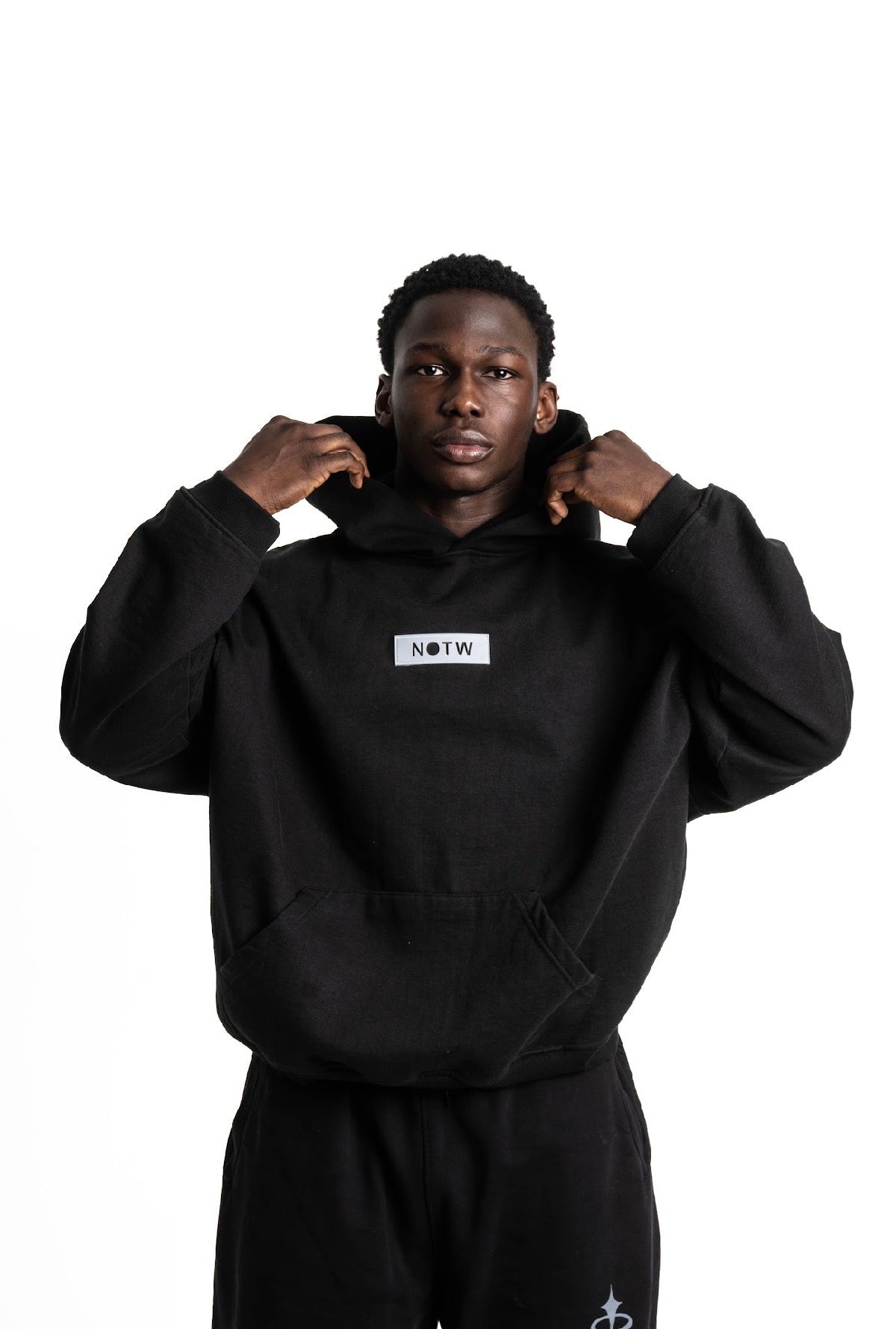
Curious what this looks like in practice? FOUND Series hoodies sit at the heavyweight end of that range — worth a look if that's what you're after.
What we publish
We list fabric weight and composition on every product because we think you should be able to compare us against anyone else. Where a garment is lined rather than brushed, we say so — because that changes what the number means.
If a spec on any of our pages isn't clear enough to make a decision from, tell us at support@remnantswears.com and we'll fix the page.


Dejar un comentario
Este sitio está protegido por hCaptcha y se aplican la Política de privacidad de hCaptcha y los Términos del servicio.