
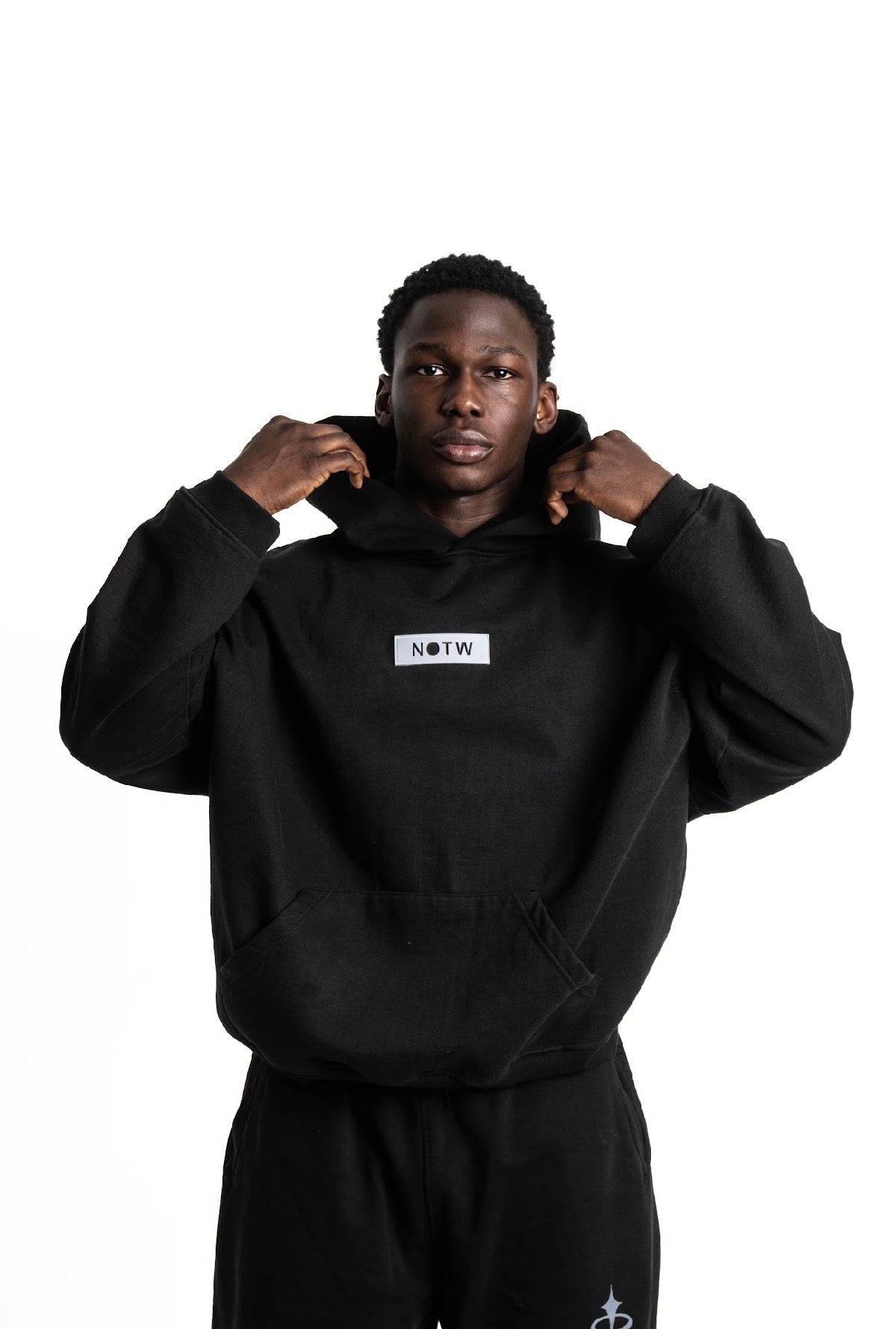
Pick up two hoodies at the same price. Both feel soft inside. One will keep you warm walking to the car in February and the other won't.
The difference isn't weight, and it isn't price. It's whether the inside of the garment is brushed or lined — and almost nobody explains which one they're selling you.
Brushed-back: one fabric, roughed up
The overwhelming majority of hoodies are brushed-back. The garment is made from a single fabric — usually French terry — and the inside face is mechanically brushed to raise the fibres. That raised nap is what gives you the soft, fuzzy feeling when you put it on.
Brushing does trap a little air, and air is what insulates. But it's a surface treatment on a single layer. There's a ceiling to how much warmth you can get from it.
It also fades. The nap flattens with washing and wear, which is why a two-year-old hoodie feels thinner inside than it did new. The fabric hasn't thinned — the brushing has worn down.
Fleece-lined: two fabrics, bonded
A lined hoodie is built differently. There's an outer shell — which takes the abrasion, holds the colour and carries any print — and behind it, a separate layer of fleece.
That second layer is doing a different job. Polar fleece has a deep, lofted pile that traps a substantial volume of still air against the body. Still air is one of the better insulators available, and the more of it you can hold in place, the warmer you stay.
Because the fleece isn't the outer surface, it doesn't get abraded by bags, seatbelts, chairs and sleeves. It keeps its loft far longer than a brushed nap does.
How to tell which you're buying
Product descriptions rarely say outright. Look for these signals:
- "Brushed interior", "brushed-back", "soft brushed fleece" — single layer, brushed. Fine, but not a cold-weather garment.
- "Fleece-lined", "lined with", "sherpa-lined" — two layers.
- A single fabric composition like "100% cotton, 400 GSM" almost always means brushed-back. A lined garment usually describes shell and lining separately.
If you can handle the garment, turn the cuff inside out. On a brushed-back hoodie the inside and outside are visibly the same fabric. On a lined one you can see — and feel — where one ends and the other starts.
Where GSM fits in
Fabric weight in grams per square metre gets quoted constantly, and it's useful, but it measures density rather than warmth.
A 450 GSM cotton hoodie is substantial, structured and drapes well. A 350 GSM fleece-lined hoodie will be noticeably warmer despite the lower number, because the construction traps more air.
GSM tells you how a garment will hang and how long it will hold its shape. Construction tells you how it will perform in the cold. Use both.
The blend question
Pure cotton is the default premium signal in streetwear, and for a brushed-back hoodie it's usually the right call — it breathes and it feels good against skin.
For a lined winter piece, a poly-cotton blend often outperforms it. Cotton gives you the hand-feel. Polyester holds its dimensions through washing, dries far faster, and resists the sagging that cotton develops at the cuffs and hem after a season.
A blend in a winter garment isn't a cost-cut. It's the right material for the job.
Which should you buy?
Brushed-back if you mostly wear hoodies indoors, layer them under a jacket, or run warm. It'll be more breathable and less likely to overheat you at a desk.
Fleece-lined if the hoodie is your outer layer in genuinely cold weather. If you're in Calgary in January and reaching for a hoodie rather than a coat, this is the one.
Most wardrobes want both, for different months.
Our range
The FOUND Restoration Hoodies are heavyweight brushed-back — built for structure, drape and year-round wear.
The FOUND Hoodie in Crimson and Midnight is fleece-lined: a poly-cotton shell with a polar fleece lining behind it. Warmer, built for the part of the year when a hoodie has to do the work of a jacket.
Same silhouette. Different job.


Leave a comment
This site is protected by hCaptcha and the hCaptcha Privacy Policy and Terms of Service apply.